Project Case Study
Ennalogue Solutions Website
A B2B data consulting website designed to make Ennalogue Solutions easy to understand at a glance, establish trust through a clear service structure, and guide visitors toward inquiry and RFP submission.
View Live Project →Overview
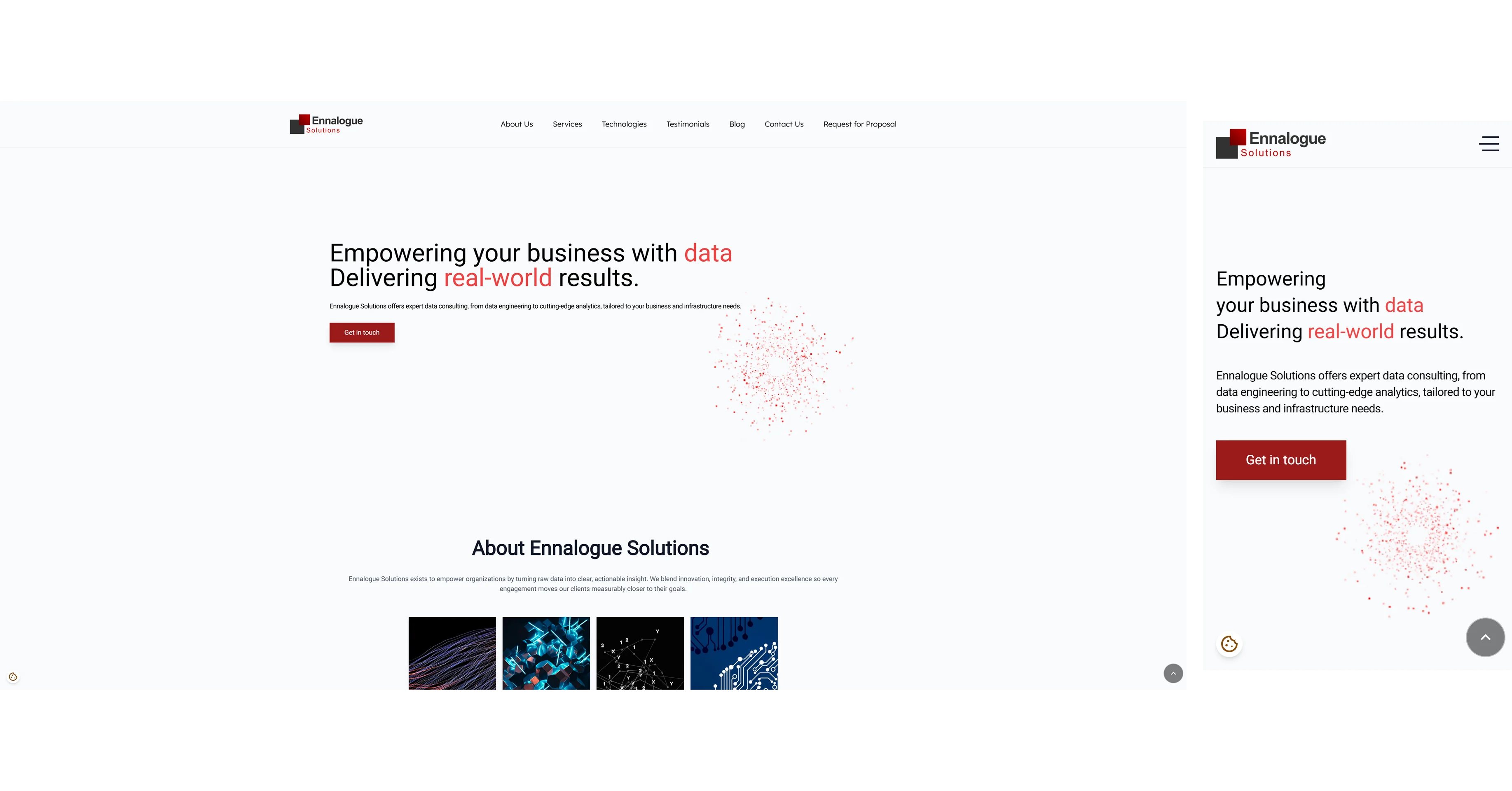
Ennalogue Solutions is a B2B data consulting website built around the message that data should be turned into clear, actionable insight. The official site presents the company as a trusted partner for data engineering, analytics, and infrastructure needs, with a direct first-view statement and a simple path to contact.
The experience is structured like a focused one-page marketing site: introduce the value proposition, explain the services, reinforce trust with proof and technology, then route interested visitors to contact or request a proposal.
Objectives
Make the company’s data consulting value proposition clear on the first view
Present service capabilities in a scannable structure
Build trust through an explicit about section and transparent positioning
Support both casual contact and formal proposal requests
Keep the page easy to navigate with anchored sections
Audience and UX Constraints
Primary visitors are business decision-makers evaluating a data partner. They usually want to know:
What does the company do?
Which data problems can it solve?
How can I contact the team or request a proposal?
The site answers those questions in order, using short section labels and a direct call-to-action flow.
Information Architecture
The page is organized around the same anchor sections used on the live site:
About Us
company mission and positioning
Services
core data consulting offerings
Technologies
credibility through the stack and categories
Testimonials
trust reinforcement
Blog
thought leadership and data engineering content
Contact Us
direct inquiry route
Request for Proposal
formal project intake
Key UX Decisions
1) Direct hero messaging
The hero leads with a concise statement about empowering businesses with data and delivering real-world results. The goal is to make the positioning easy to understand immediately, without forcing the visitor to decode the offer.
2) Service categories instead of a feature dump
The services are framed as solution categories, not a long technical list. This makes the site easier to scan and better aligned with how B2B visitors evaluate capability.
Services highlighted on the live site include:
Data Warehousing
Data Pipeline Engineering
Reporting Tools
Architecture & Security
Data Science & Analytics
Automation & ETLs
Data Migration
Server Hosting
3) Technologies as a trust layer
The technologies section works as a credibility signal rather than a marketing gimmick. Grouping capability by category makes it easier for visitors to understand fit at a glance.
4) Blog and proposal flow
The blog section acts as an entry point for educational content, while the Request for Proposal path gives the business a formal channel for qualified leads. That combination supports both awareness and conversion.
5) Contact and RFP kept separate but easy to find
Visitors can either use the casual contact route or move straight into a proposal workflow. This keeps the site flexible for different lead types without adding friction.
What This Means for the Business
Spam-free inquiries: Website inquiries are protected against bots and spam, so the team spends its time on real leads.
Inquiries delivered by email: Messages sent through the site go directly to the team by email.
Ready for more languages: The site is structured to support multiple languages, so localized versions can be added when needed.
Consistent and fast on any device: The layout adapts cleanly from phone to desktop, and page weight is checked regularly to keep loading quick.
What This Project Demonstrates
Turning a data consulting service into a clear B2B marketing narrative
Organizing a one-page site around trust, capability, and conversion
Building a proposal-oriented contact flow that still feels simple to use